Saturday, July 07, 2007

ii N T E R
V in circle I E W

Dickon Hinchliffe is a founding member of the band Tindersticks, an outfit well lauded for its work on the film scores of Clair Denis. Having branched out on his own as a solo composer for Ms. Denis on Vendredi Soir (2002), a piece of music the Village Voice dubbed an "expectant score that enhances the flavor of skewed enchantment and nocturnal mirage, capturing the fantasy evening's blushing irreality and weak-kneed tingle, down to the final note of bleary, dawning euphoria," he's become a composer of the highest regard amongst film lovers all over the globe.

On assignment from ShortEnd Magazine, I caught up with Dickon to discuss experimentation, subverting conventions & his scores for Claire Denis, Ira Sachs and others.
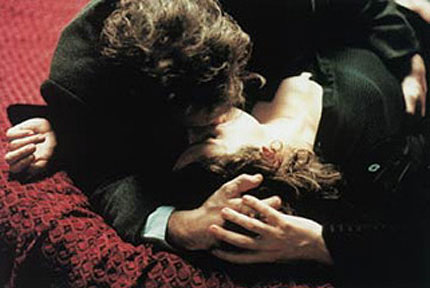


Barry Jenkins (SM): I was gonna ask how you came to film composing, but I kind of know that piece of the story so let’s jump right in from there. So basically I want to say you came to composing through your band Tindersticks which did Trouble Every Day (2001) and Nenette et Boni (1996) for Claire Denis, is that right?

Dickon Hinchliffe: That’s right, yeah.

SM: So what was the process like for you branching out from the band to work on Friday Night (2002)—or actually, even before you get to that, what was it like scoring a film as a part of a band?

DH: I mean, through the first film, Nenette et Boni, it was all just a totally new experience. We spent the whole time experimenting really. It was a completely new thing for all of us, because it was like, all of a sudden you’re not just making music for yourself. You’re involved with an extra medium, you know, the images. And I suppose I realized at that point that with music for film the biggest difference is that you’re kind of sucked into someone else’s world and being a part of that world, rather than,--we used to make music purely, you know, for ourselves. So it was quite a big switch. And with that first film we were kind of…you know we didn’t have any technology really to do it with, it was literally one of us would be pressing play on the videocassette—

(Barry laughs)

DH: —with the rest of the guys setup in the room and we would just be playing along in a crude, but organic way. In some ways it was a bit of nightmare in terms of how long it took us to do things, and now I can do it rather quickly, but in other ways it was a good way to learn because it was done in a very sort of basic, natural way.

SM: And that was Nenette et Boni, correct?

DH: Yeah, the whole of that score really was kind of based on little songs, a little piece of music that we wrote. We played to picture a little bit, but on the whole it was more getting it the right mood, and feeling then we could record things and we’d, you know, we’d then look at it against picture and film, and we’d try it a bit faster, or, you know, have a chorus out or something. It was very sort of hands on.

SM: Now the song “My Sister,” did that come before Nenette et Boni or after?

DH: That’s from the second Tindersticks album, and Claire Denis, when she approached us to do the film, she’d been listening a lot to our second album when she was writing (Nenette et Boni). And…she liked it enough, that’s when she asked us to work on the film itself.

SM: And then…your progression to Friday Night, taking that on as a solo composer in your own right, how did that come about?

DH: In a way, Trouble Every Day was like a bridge between the two. With Trouble Every DayNenette et Boni. And it’s mainly orchestral so it was scored in a more conventional film score manner. So, in a way doing Vendredi Soir (Friday Night), it wasn’t like a huge jump because I’d sort of just started doing that kind of thing already with Trouble Every Day. It was kind of natural. it was three of us in the band really. We had a song that the band had written a while ago, everything except the lyrics, and I always thought it’d be great for a film soundtrack. It would have been on our third album, but we held it back because it really suited that film. But apart from the song really, I sort of took it on in a more film composer’y way just to sort of, to write and develop and I wrote more to picture than we’d done with

SM: So let’s take a side-step for a second, when you guys were working as the band on Nenette et Boni and Trouble Every Day, did you guys have roles or…was the responsibility spread out evenly or were you even at that point in time taking it upon yourself to act as composer?

DH: I think with Nennette et Boni, it was very sort of…we all kind of had roles in the band anyway, and in a way my role was often more sort of the melodic, arrangement side of things. So with Nennette et Boni, we kind of just staged like a band in a way, like we worked from songs. It wasn’t that different. I feel we got a bit excited by the whole process of watching how music changes images, and therefore the power music has within film. And that’s something I think we all knew, but until you actually do it you, you don’t really know how it actually works. I think then with Trouble Every Day the roles changed a lot, because we all agreed it needed to be a more orchestral score, and because that was more my kind of thing I sort of stepped into the driver’s seat more with that film.

SM: It’s funny, in the commentary track of Friday Night, Ms. Denis states that the reason she went away from the full band as score in the film was because she was going to use the music from the radio as songs and just needed something to link the pieces together. But as I watch Friday Night, in the end your work comes across as very involved in the film.

DH: I think what she probably is trying to say is that she wanted the film score to almost feel like it’s coming out of the radio as well, so that the two things sort of would bind together and not feel like, “Oh this is something on the radio now and then this is something that’s film score.” Some pieces are on the radio and then other pieces, a couple of classical pieces that you’re not sure if it's something I did or if it was a piece on the radio. It was kind of innate playing around with conventional source music and score, and sometimes what I’d done was made to sound like it was coming out of the radio, so in a way I was writing source music as well as score. She’s really big and clever about subverting conventional approaches to music in film in general.

SM: Yeah, I actually have a piece of audio I’m going to play for you in a bit from her about your work in Friday Night

DH: (laughing) Okay.

SM: At what point did you begin writing the music for that film, was it at the script stage, or was it during the rushes or did you wait until the footage was being assembled? Because your music is like a character in that film, and there are certain points where without your music the scenes would play very differently.

DH: Early on. What I did, what I do on most films I work on is to try and get the script quite early and start to get ideas together just from reading and imagining. Because I think that as a composer, if you write from the script before the image, you come up with things you’d never write once the film’s made. And yeah, a lot of that stuff ends up getting thrown out because it doesn’t necessarily work, but you sometimes can get a real body of ideas that stick. You might need to change the tempo, instrumentation, whatever…but if you can somehow get inside the spirit of the script you often find that—if the director is working reasonably close to the script—you find that you’ve kind of gotten inside the film even before they’ve filmed it. And something Claire was always keen on, though we never actually pulled it off, was for the actors to have the music playing when they were acting. Which is something we’ve managed to do on the last film I’ve just done (Ira Sach’s Married Life)…and which Sergio Leone did a lot with Morricone. It’s kind of making music apart of something early on rather than, “Okay we’ve made the film with temp music and everything and now we just need to get a composer to dot the “I’s” and cross the “T’s” and make it all work.” And with Vendredi Soir, quite a few of the pieces end up being on the film that are composed just from the script.

SM: Moving on to Forty Shades of Blue. It’s a funny story, I read an interview where Ira Sachs said they were using Trouble Every Day as the temp score when they were cutting the film and then they were like, “Well why don’t we just get this guy to come in and do the score?” What was it like to get that call?

DH: It’s quite funny, he did just call me up, I was in France on holiday at the time. And I didn’t know what his film was like or anything, so I was like, you know, “Send me what you got.” It was a really interesting film—there’s something about it I really loved—so I got involved.

SM: Now how did you manage to make your work on Forty Shades fresh, while at the same time understanding and respecting that the director wanted your work because of motifs he’d seen in your previous films. Because I guess you can’t give him the Trouble Every Day score but he wants you to do something in that vein, so what’s it like to have an assignment of that nature?

DH: I think it in a way it was less Trouble Every Day and more Friday Night

SM: I’m glad you said that, because in the interview he only mentions Trouble Every Day, but in the film there are certain pieces that sound very much like Friday Night, though they are different.

DH: I think that’s because Friday Night is not available. His editor, Alfonso, I think he said, “Why don’t we try this?” And I think Ira would have liked his temp to be Friday Night, but here I’m glad he didn’t. Even though it’s good to be able to temp real music, it also is quite tough because when you come in to write something, if what they temp with is working really well, it’s kind of frustrating because you’re kind of having to recreate yourself in a way that can be really difficult. So because they temped more with Trouble Every Day, it wasn’t such a problem. And further, there isn’t a huge amount of music in that score because it’s so much of the source music, the blues and Memphis soul stuff.

SM: And what was that like, to have your music placed right beside this music from the deep American South, that’s a very specific sound coming from Memphis. Was that at all intimidating realizing that your compositions would have to play side by side with this music?

DH: It was tough, but I think in some ways because we actually rerecorded some of the tracks with different artists and things, it wasn’t just a string of classic recordings. At the same time I made some conscious decisions about instrumentation and the way I was gonna do it. Because there wasn’t a budget to do it with an orchestra, I played all the parts myself, to get at a little string section in a way that on some of those old recordings…I was trying to sound a little bit like that in a crude way. It was interesting.

SM: You’re a violinist, correct?

DH: I play violin, guitar and keyboards. But violin is my first, literally.

SM: It seems like in the Friday Night and Forty Shades soundtracks that the piano actually paces the score in those two.

DH: Yeah.

SM: I just thought that was interesting because it didn’t seem like you had as strong a background in piano, but when you approached your compositions, that’s the instrument that dictates the score.

DH: It’s hard to write music on the violin unless it’s going to be a sort of violin piece or a folk piece or something like that. In terms of film, I think most people find it easier to write on keyboard. Having said that, the piano—especially in Vendredi Soir—it was a sound I thought just worked really well in terms of it, it’s got a kind of instant, kind of sharp and powerful, it’s got a kind of feel that just sits right with it. I just used it to write little motifs and the strings are there but they, in a way, are supporting what the piano is doing.

SM: Keeping Mum (2005) is a film of a completely different tone than—

DH: You’ve seen it?

SM: I have seen it.

DH: Okay.

SM: —a completely different tone and it seems like you brought a completely different palette to that film, and it made me think you adjust the instruments in your toolbox to the material you’re working on—

DH: Yeah.

SM: —because that score, it’s fun, it’s all over the place. There’s Hollywood strings, and then there’s even this jazzy, boppy swing thing going on. It seems like that was a lot of fun to work on.

DH: Yeah it was a lot of fun. I think it’s kind of unusual in that I did all the music on it; there’s no source music on it at all, which is really unusual for a modern film. And because of that, I had to sort of cover all the different bases the director was hearing music changing. Stylistically, the biggest challenge in a way was having different styles within a score, but making it all sound like it was a score.

SM: Now how did you come to that gig, because looking at Forty Shades and Friday Night, I would not think, “Hey, this is the guy I want to score, ya know, my…British Comedy?”

(Dickon laughs)

SM: I mean, but it works, you definitely pull it off.

DH: He basically wanted to get some of the…I don’t know, it’s like a black comedy I suppose, and I think he was resisting the comedy staying too sweet and too, I don’t know…superficial. So he approached me because he thought I could do something that would get inside the film a bit more and not just be a sort of happy little comedy school that bubbled along. And I think also there’s some darker elements to the film that he wanted to be brought out with music even in a fun sort of way.

SM: Well, yeah, because you’ve become the dark music guy, right?

DH: The thing with Tindersticks is there’s always a humor in our music that maybe not many people got besides us but—

SM: Well it’s definitely a bit sinister, your music, Tindersticks.

DH: (laughing) Well, yeah, I felt tracks like “My Sister,” though, had an element of dark humor to them, lurking in there somewhere…for me anyway.

SM: Are there film scores you find inspiring or maybe composers, film or otherwise, that you feel have inspired you as a composer?

DH: We listened to film music, and I had an interest in it even as a kid. We used to have this thing called “Saturday Night At The Movies.” Each week it would show an old Errol Flynn film or something like that. Unconsciously I think I was taking in all those old great Hollywood film writers like Korngold and all those guys. I think a lot of them were immigrants who went to America in that early age of Hollywood and…I think they kind of influenced me unconsciously. Then as I got older, I started to realize I really liked people like Elmer Bernstein, Bernard Herman—I’m a big fan of his—you know, John Barrie is another one, Morricone…and it’s something that just sort of over the years, it effected the music in Tindersticks a lot and ended up probably coming out in the film scores.

SM: It’s interesting because Ms. Denis, she actually compares you to Georges Delerue—

DH: Ohhhhhhh, yeah.

SM: I’m going to play this clip for you, and I hope you can hear it, if not we can stop it—

DH: Okay.

Director Claire Denis speaking over Dickon’s score for Friday Night: "I have to say something about Dickon, about this music…which makes my throat completely…blocked. Because to me it has a quality of a…certain piece of Delerue or Duhamel, for Le Mepris, for Pierrot le fou. It’s kind of, it’s a music that brings…I don’t know, destiny, you know? Kind of like, something that every human being can share which is…a moment, a time. But in the music it contains already that the time is going to end…just like a clock. There is that in what Delerue did for Le Mepris."

(Barry stops the clip)

SM: So did you catch that Dickon?

DH: Yeah, I got most of it. Where was that from?

SM: That is from the commentary on the Friday Night DVD—

DH: Okay, yeah.

SM: It’s during the bedroom scene and I was glad you mentioned the piano earlier the way you did because she mentions it in this way; she feels like you do a very good job communicating time in your scores. And in that film it’s all about time because it’s only one night…and even though the score, it kind of sweeps you away, it reminds you that the time is ticking. When you wrote that piece of music, that piano melody, was that something that was on your mind, or had she articulated that to you?

DH: No, she hadn’t really. That was a piece I wrote very much, much more to picture than a lot of the story. It wasn’t one of the pieces I wrote to the script. And I think it was…I remember coming to the occasion that actually made me write that piece. Because I was really frustrated at the time, and I knew that I needed something important for this scene. I tried lots of things in the vein of the rest of the score that hadn’t worked, and it was something that just came out of two notes, it was like that, the way the piece starts…just a tiny little fragment of a melody that I liked and I just worked on it and just…made it grow into something that started off being very tentative and small into something bigger and more expansive.

SM: It’s a beautiful piece of music.

DH: Thanks.

SM: Do you want to just riff a minute on what it’s like to be a film composer. I mean is this something you can see yourself doing for…the rest of your years? Not to be too grandiose about it.

DH: (laughing) I’ve just finished doing a film, again with Ira Sachs called Married Life. The thing that I like about it is that each film is very different, and even though with this film it’s the same director, it’s a very different kind of film, a different function because it’s set in the 1940s and I’m having to do things I haven’t done before. The thing I love about it is the way it’s sort of a challenge and you kind of--it can drive you mad as well. I mean I don’t like the way you have to be very meticulous in the way you organize yourself and your time and…there are times when you feel very sort of locked in if you’re working on your own compared to say when I’ve worked with bands and things. But at the same time, you’re very much working as part of a big, huge team of people working on a biggish movie, it’s a massive team game and yet you’re spending a lot of time on your own so it’s quite bizarre. But then when you actually get to record the thing and it works and you feel good about it, it’s like a, quite a very satisfying, elevating moment. So…yeah (laughs) I’d like to be carrying on.

SM: And to what degree do you feel like you’re articulating yourself as a musician, because I assume that…. You’re an artist and I think…there must be things you’re consumed with and you’re making these films and I assume that some of that makes its way into the scores. How is that? Is scoring fulfilling in the way you’d expect it to be, or is it more…work?

DH: I think it’s a mixture, I think definitely, you know, I couldn’t do it if I wasn’t being able to express myself. I think to me music is all about expressing who you are, your feelings and communicating that. I wouldn’t be very good at just sort of doing music for functional reasons. And so, what I tend to do is even when I know the music is very much a background element, and it is performing a function in the film, I always kind of make sure it means something to me. And I think because of that, it means that the music can stand up in its own right, away from the image. Which to me is important, I think that film music you can listen to as music; you don’t have to be watching the film at the same time.

SM: Well, I’m right about at the thirty-minute mark, I have one last question—

DH: Yeah, sure.

SM: —that I didn’t get in earlier. In Forty Shades of Blue, the pieces you composed seemed very much to be in the point of view of Laura, they’re really focused around her and what she’s going through. And then you look at a film like Friday Night, you’re setting the tempo, you’re setting the tone. I mean you’re really an equal character in that film. I wanted to know what was the difference in doing those two jobs, and how as a composer, what you get out of those two scenarios.

DH: That’s interesting. With Forty Shades it was very much a conscious decision the first time I saw the film, I thought the score would come from Laura. She needs to have her music because the Rip Torn character, he has his music which is him being a producer, the Memphis music. And so to me to build a musical interaction, she had to have music that was the kind of psychological music of her life, her feelings and emotions. That was a very important thing for me with that film. Also the difference from Friday Night…Ira Sachs described it as like poetry, whereas Forty Shades of Blue is more like a novel. And so in terms of the music there’s an awful lot more space in Claire Denis' work for music; it can occupy a very different kind of space than in most kinds of films. Even someone like Ira, even though his films are very lyrical, there aren’t these sort of long, poetic moments that you get in Claire Denis' films where the music comes to the fore. It’s kind of interesting because the film I’ve just done with him I think is a kind of balance between the two. I think the music definitely has a bigger role than it does in Forty Shades of Blue. But at the same time, it’s still very much driven by dialogue. I think with Claire Denis, because her films aren’t driven by dialogue, they’re driven by…sensuality, and…suggestions of things rather than through language. So the music, it…you know, automatically fulfills it. It has a different sort of role.

SM: Well, thank you for that, I was actually trying to draw you out of a hole there. I think you came out a little bit—

(Dickon laughs his ass off)

SM: —because man, you did a LOT of work on Friday Night, and it really takes that film to a point beyond its narrative.

DH: Oh thanks.

SM: And…thank you for this interview, I wish you all the best of luck. I’m sure you don’t need it.

DH: (laughing) Well, I think I do! Thank you.

For more information visit www.dickon-hinchliffe.com.

Thursday, May 03, 2007

Coach Park 1 2
One Letter - L A_1853 B Oo R S

Neighborhoods denote classes, streets denote who you are. Man, depending on where you were born, your story is written even before it starts. These are the opening lines of The Twelve Labors, an earnest if naïve addition to the growing canon of Brazilian films taking the struggle of the country’s dark-skinned and lower classed citizens as its subject. Spoken in narration by 18 year-old protagonist Heracles, they prove a pitch-perfect example of the clunky hand with which first-time director Ricardo Elias’ handles the material. Recently released from a jail bid, the troubled but well-meaning Heracles joins his well-to-do cousin at a local courier as a motorcycle delivery boy. Heracles wants to go straight and the film posits his first day on this gig as the penultimate moment of his shot at redemption. As he sets out on errands, haggling with secretaries and wealthy citizens alike, the boy’s mettle is repeatedly tested under a pounding soundtrack and Brazilian sun.

Despite taking the Herculean myth as its inspiration, The Twelve Labors spins a narrative that neither elucidates nor clarifies the lives of its characters nor the world they live in. The aforementioned labors prove pedestrian, rising to the complexity of Heracles learning brotherhood by waiting five minutes with a fallen motorcyclist, or circumventing a snotty secretary by observing a fellow courier stamping his own invoice. Taken on their own, these accomplishments amount to the average kinks of the first day on a job. When wed to Heracles' painfully arched voice-over, however, they are cripplingly trite. Most damning of all is a shameless homage to The 400 Blows in which Mr. Elias ends his film with Heracles journeying a considerable distance to the coast of Brazil, walking out into the rising tide and looking back into the camera just as Antoine Doinel did in Truffaut’s masterwork. It would be one thing if the moment were earned and presented as an allusion to some metaphysical connection between the films’ protagonists, but such is not the case. Coming after so much purposeful intent wielded as a mask for narrative shortcomings, it is but the final in a series of letdowns in a film with a voice incapable of articulating its earnest ambitions.

Tuesday, May 01, 2007

BScrabble Letter UnnnPewter Letter NYyy


C is for Chadney H Oo One Letter / W

In John Barker’s Bunny Chow, three South African comedians set out on a road trip to perform at Oppikoppi, South Africa’s bigger, badder, better version of Coachella. David Kibuuka, Kagiso Lediga, and Joey Rasdien all play versions of themselves, riffing off one another with a locker-room rancor honed on years of friendship. Kagiso is the funniest of the trio, a laid-back ladies man with a beautiful girlfriend despite his womanizing ways. Joey plays the Arsenio to Kagio’s Eddie, chiming in with sweet follow-up jabs when not stressing over his wayward devotion to his Muslim heritage. David plays the straight man to both, an aspiring comedian cum dishwasher with a heart of gold and the instincts of a tire iron. Slight on narrative but long on verve, the film represents the best of DIY filmmaking and homegrown cinema with its fuck-it-all video cinematography and frank depictions of sex, comedy and rock and roll. Moving from fidelity to interracial dating and the politics of post-Apartheid South Africa, Bunny Chow manages to be sincere, hilarious and engaging despite covering the seemingly superficial topic of stoners and their conquests to get laid.

To his credit, Mr. Barker never directly addresses the oddity of three black comedians performing for a snow-white crowd hundreds of miles away from the progressive city centers of his homeland. Rather than submit to the flagrant devices so readily available, he and his cohorts slip them into the corners of their scenario: As Kibuuka and his beautiful white muse screw in the back seat of his car with the rock fest booming around them, the woman asks, “Can I call you Dark David?” Kibuuka pauses everything to think this through as the haze of sex envelopes him. It’s in this moment that Bunny Chow states all it needs to in living up to it’s namesake, an allusion to a loaf of bread from which the inside is scooped out and filled with a melting pot of ingredients.
Detail: Letter From Northern Engineering Works Building--Detroit Mi T is for St Jean R A small swung n small neon g É

The Cannery Squircle U on canvas L T U Rrrr Ejaune

Steve Kurtz is an artist and educator who lost his wife (heart failure) and freedom (the FBI launches a terrorism case against him) on the same day. Strange Culture, the hybrid documentary by Lynn Hershman Leeson, retells Kurtz maddening experience in equally maddening fashion. At once a dramatic reenactment piece and alternately a straightforward news-style documentary, the film creates a formalistic rubric wherein the lines between life, art and journalism become indecipherably blurred. As Kurtz and his wife Hope, Thomas Jay Ryan and Tilda Swinton open the film as the couple arguing cautiously over breakfast. Twenty minutes later, the real-life Kurtz appears speaking as himself (and proceeds to narrate and reappear at random throughout). Ten minutes thereafter, Ms. Swinton and Mr. Ryan are glimpsed between takes, speaking as themselves and of themselves portraying and grappling with the Kurtz’s lives.

Lost in the muddle of so much formalism is the heartstring drama of Kurtz’s ordeal. By presenting the story in such intellectual fashion, Ms. Leeson (willfully, or inadvertently, it’s unclear) makes Strange Culture a purely intellectual endeavor. As such, it cultivates a language all its own, sacrificing the purity of experiencing Kurtz’ anguish in straight-ahead fashion for an analogous blend of the real life story’s pain and the heady anguish of embellishing it through dramatization. The film doesn’t always strike the balance necessary to pull it off but it strides more than it falters. Given the merits of Kurtz’ story and the difficulty of bringing any tale to the screen, there’s victory in that.
Scrabble Letter B A Cimetière de Montmartre A k4 O


Abderrahmane Sissako’s Bamako is an African film of the sort grown common in recent years: financed jointly with European and American backing, the film is an earnest polemic on the savage blows the international community has felled upon the continent. The World Bank, the IMF, G8 and even Paul Wolfowitz all take their lashes in the form of testimony given in the film’s main through line, a show trial in which the plaintiff, “African society,” argues against exploitation by the aforementioned defendants. Rather than rely solely on the histrionics of trial procedural monologues, Mr. Sissako pairs his interview-style court scenes – shot plainly in an open-air courtyard, the plaintiffs speaking at length in fixed frame, un-broken takes – with a mystical blend of the mundane and the absurd. As the trial takes its course, the stories of a dissolving marriage, a bedridden invalid and the listless lives of the Malian plaintiffs fill the periphery in a blend of metaphors at once plain and profound. Even the intrusion of a slapstick western shootout can’t derail the mission of Bamako. From first frame to last, Mr. Sissako dispenses his infallible case for his home continent in seasoned fashion. A rejoinder on the mention of Mr. Sissako’s exclusion of trial procedural histrionics; the film does conclude with closing arguments. Speaking passionately on behalf of the Malians, a French prosecutor mentions the futility of tossing Paul Wolfowitz into the Niger, quipping in deadpan, “The caimans wouldn't want him.” In this screening, an uproarious mixture of laughter and applause rose from the crowd. Hopefully somewhere in Sub-Saharan Africa Abderrahmane Sissako was smiling.

Thursday, April 26, 2007

Scrabble Letter S F I F F


It's that time, again.

Over the next two weeks, the San Francisco International Film Festival will bring some of the finest work in international and independent cinema to Bay Area theaters. Punctuated by programs as diverse as Spike Lee's epic When The Levees Broke and Garin Nugroho's audacious Opera Jawa, this year's festival appears every bit as engrossing as last year's.

As always, a festival is only as good as the films you actually see. So...my festival playlist:


(click on the images for more on the films)

"Left to right, left to right"...the films and their directors:

Bamako - Abderrahmane Sissako
Strange Culture - Lynn Hershman Leeson
Bunny Chow - John Barker
The 12 Labors - Ricardo Elias
Daratt - Mahamat-Saleh Haroun
A Few Days Later... - Niki Karimi
Colossal Youth - Pedro Costa
amour-Legende - Wu Mi-sen
When The Levees Broke: A Requiem In Four Acts - Spike Lee
Fresh Air - Agnes Kocsis
Agua - Veronica Chen
Revolution Summer - Miles Matthew Montalbano

Tuesday, April 24, 2007

A W ee

Saw The Battle of Algiers at the Castro last night.

Was humbled.

How in the world did they get up the nerve and the resources to make this film?

When I'm at my lowest, fretting over an inability to raise capital or peer participation, I will think of The Battle of Algiers.

Critical analysis of this work is useless. There is, however, this: the day it becomes unprofitable to screen films anywhere other than the comfort of one's own home or--worse--iPod will be a sad day indeed. Seeing this film (as well as Terrance Malick and Nestor Almendros' Days of Heaven) on film after spending literally years bypassing opportunities to view them in compromised editions on video was worth every second of my self-imposed abstinence. The current release of Charles Burnett's The Killer of Sheep will only further this impression.

In the care of accomplished artisans and screened under peerless conditions, film is capable of so, SO much.

Again....

Awe.


Monday, April 16, 2007

J DSCN5578 E

Syndromes and a Century by Apichatpong “Joe” Weerasethakul


Metaphysics rule the day in this evocative, abstract meditation on love, medicine, and the evolution of modern living by Thai auteur Apichatpong “Joe” Weerasethakul. Set at once in the present, the future, and in memories of the past…at a quaint countryside hospital as well as its monolithic city counterpart, the film observes the everyday ticks in the lives of patients and caregivers: a dentist who coos Thai Country ballads, a monk with suppressed longings for a career as a DJ, a physician so smitten with his coworker he proposes to her, and a doctor so riveted by the sway of nature she’s indifferent to the possibility of romance.

The film opens twice with a female physician questioning a young doctor recently added to the staff. Staring directly into the camera, the pair exchanges a series of questions and answers identical in the films two halves save the young doctor’s stated position. In the first half or chapter, a film set in the countryside amongst sun, open-air rooms and fields of tall grass, the young doctor has left the army and come to serve as a general physician to the rural dwellers of Thailand. In the film’s second chapter, the young doctor arrives at the expansive Bangkok medical center as a pharmacist, having switched his studies while in med-school.

The difference between the doctor’s practice in the film’s two halves is auspicious for the attention “Joe” pays the sequence. As with most of Syndromes and a Century, events dramatized in the film’s intimate, naturalized first chapter are mirrored to some degree in its austere, sterile second chapter. In the first chapter, a physician’s romantic aspirations for his coworker sends the film on a journey through flashbacks, a sequence so stuffed with amorous innocence the dense Syndromes appears to float off the screen. By contrast, in the second chapter, the considerably blunted romantic dalliances feature a doctor so turned on by his female counterpart he reaches a visible erection. Similarly, a singing dentist and his patient—a soft-spoken young monk—forge a friendship so tender it nearly eclipses their boundaries of religion and profession in chapter one. In chapter two, the same characters fail to connect, the monk’s modernized angst echoing the dichotomy between the examination room’s décor in the two chapters. Even a solar eclipse impeccably photographed in the early goings gets its reprise in the form of a fume guzzling air duct in the final stanza, the camera isolating the black ovular mouth of the duct against a searing white light to create an imposing replication of the mystical phenomenon. As well, where the first chapter winds its way farther into the wilderness, culminating with the romantically disinclined doctor journeying out to the orchid farm of her innocent suitor, the second descends further into a surrealist bent, plunging deeper and deeper into the bleak recesses of a mega medical center.

This narrative duplicity is the film’s most obvious trait, a pattern lending itself to quick commentary on the relationship between similar sequences in the two chapters as a reflection of the effect disparate environments can pose on one’s spiritual self. However, to leave an analysis of the film at that is to deny “Joe” due praise for his exemplary employ of craft. The wind talks and the sky glows in the first chapter just as the walls and corridors of the second skulk along amidst ominous atmospherics. At any point Syndromes and a Century could be isolated into a five second loop and lose none of its potency. “Joe” projects artistic intent into every frame of the film.

Western cinema has done film art the injustice of subverting it to narrative. “Joe” thrashes that concept. While the sequences themselves progress in linear fashion, the scenarios moving from point A to point B as in real life, the thematic impart of the work derives much less from the “what, when, where, why and how” of the piece than from a multi-disciplined analysis of the juxtaposition of the elements at play. Much like visual or performance art, Syndromes and a Century requires a contextualization that reaches beyond the information found in the film itself. An understanding of “Joe”—his history and his motivations behind making the film as well as a familiarity with the works he's completed prior—is essential in cultivating an analysis. Just as a painting, sculpture or lyric is embellished by the nature of its origin and the intent of its author, its impart continuously evolving in light of the observer’s understanding of those elements, so too does Joe’s cinema (as does any cinema not treated as the indifferent pictorial presentation of a narrative).

As Jonathan Rosenbuam wrote of Claire Denis in his analysis of Beau Travail, Syndromes and a Century proves Apichatpong “Joe” Weerasethakul is capable of poetry well beyond the range of most modern or past filmmakers. This film is a work of art.

Sunday, April 08, 2007

pp Oh No! L information Scrabble Letter C E

B is for buried DSCN5501 a T

Robinson Devor’s Police Beat is sublime. Hailed by Kenneth Turan as Sundance “at its best,” the film is a heartbreaking footnote in the sordid recent history of regional American cinema: a labor of love shot on film in the creators’ American Northwest; hailed by critics; dismissed by distributors; screened on Beta SP a belated two years after its debut; by all accounts a fucking tragedy.

“Z”—a Senegalese immigrant turned Seattle bicycle cop—is distraught over his strained relationship. When his girlfriend ventures on a camping trip with her male roommate, the pangs of jealousy come upon the beat cop in a fever of melancholy. Through voice-over spoken in his native tongue of Wolof, Z reasons his mounting despair as Mr. Devor and co-writer Charles Mudede (an African immigrant and journalist who calls Seattle home) set him upon a series of disturbance calls taken directly from Mudede’s “Police Beat” column for the Seattle weekly The Stranger.

Mr. Devor is keen in conforming disparate styling here. Z’s voice-over, an interior monologue crafted with the appropriately erratic rhythm of consciousness, is an effective counterpoint to the blunt aesthetic of the police work. Reminiscent of Alan Clarke’s Elephant, these moments unfold in a vacuum of sorts, beginning and ending with a decided indifference to the film’s narrative.

Z is a swirling mess of emotions. Checking his voice-mail with the obsessive frequency of a psych ward manic, sleeping with the phone beside his ear, envisioning adulterous scenes of his erstwhile lover with the characters’ dialogue humorously dubbed in his Wolof voice-over, he struggles to fabricate a world capable of subduing the transgressions he dreads. He fails admirably. The result is a multi-tiered consciousness that layers Police Beat with a voice of absolute feeling. At the film’s emotional apex, Misters Devor and Mudede bring that feeling to a smoldering head.

In successive subtitles, Z’s interior musing states in Wolof:

My eyes are open.

What do I see?

I see a woman.

A foolish woman.

She does not understand she has said amazing things…

…to a man with a gun.

The evocation of murder where only agony and yearning have come before is a jolt to the heart. They are many in Police Beat, though none so crushing as the suffocating hell the marketplace imposed on this moving film.

Monday, September 11, 2006

S is for Souviens (and Sheep) E Eee N 3

Ghosts of Cite Soleil—Directed by Asger Leth

Asger (son of The Five Obstruction’s Jorgen) Leth’s doc on Haitian street gangs opens peacefully on a washed out sunrise over the embattled Caribbean Island. Thematically, it may be a metaphor for the serenity of life should man remove himself from the equation, but in Leth’s hands, the image is swallowed in such bombast the point eludes. Self-named gang chief “2Pac” is a rail thin rapper who smokes weed and wields a glock while patrolling the sewer-infested streets of his port town, Cite Soleil. Once backed by Haitian president Jean-Bertrand Aristide, 2Pac, his younger brother Bily and a few other local thugs enforce a paper thin street code that creates order enough to stifle the onslaught of complete chaos. Politically, there’s much in Mr. Leth’s documentary worthy of investigation yet rather than complicate the narrative, the film settles instead for an observational approach akin to watching wild dogs set loose in a hen house. The film is loud, violent and aimless, tracking 2Pac and his cohorts through moments of pain and anguish always bathed in naiveté. When a beautiful French aide-worker falls for 2Pac, her wild blonde mane lain across his naked chest, the childish glee upon his face belies the truth of everything Leth has shown us heretofore. There are no happy endings in Cite Soleil. What begins in joy must end in pain and this film presents that truth as inescapable.

Babel—Directed by Alejandro Gonzalez Inarittu


Alejandro Gonzalez Inarritu and Guillermo Arriaga have made three feature films together beginning with the evocative Amores perros. Bathed in the thick atmosphere of the filmmaker’s Mexico City, that film blindsided the moviegoing public with a passion and familiarity nurtured by an accomplished aesthetic. In Babel, the aesthetic remains but the passion seems missing. Like the duo’s previous efforts, this film follows three storylines connected by a single event. In this case said event is the firing of a rifle, the repercussive waves of which extend to a vacationing American couple, the Mexican nanny they’ve left to watch over their children and a Japanese businessman who gifts a hunting rifle to a Moroccan guide. Each of the stories involves a crisis and fraught relationships—whether racial, familial, cultural or societal—dramatized to the point of catharsis at the will of consummate craftsmen. And yet…I could not think but compare Babel to Amores perros, a film that packs much more punch with much less dressing. Where Mr. Inarritu’s first film told each of the three stories in turn, Babel jumps from one to the next and back, always resetting the dramatic scale just at its point of peaking. What’s more, where the theme of interconnected strife seemed novel in the filmmakers’ earlier work, the device seems old hat now, a tactic that reduces dramatic interest rather than creates it. We’ve seen this film from this director in more potent form. Babel feels like the proficient sparring session of a bored prizefighter.

Venus—Directed by Roger Michel

Peter O’Toole may be the world’s most revered living actor and Roger Michel treats him as such in this rewarding, magical film about dirty old men and the poetry of mortality. Mr. O’Toole plays Maurice, a man whom much like himself is an aging actor in the final stages of life. When his best friend is bombarded by the arrival of an angst-ridden teenage niece, Maurice indulges himself insomuch as his will allows. Teaming once more with writer Hanif Kureishi, Mr. Michel again proves himself adept at tackling the taboo without sacrificing complexity. To be fair, much of what takes place is, on the surface, utterly decrepit. As Maurice, Mr. O’Toole willfully solicits a youth with tactics that are morally distasteful. With Venus, however, Mr. Michel is out to investigate the fleeting beauty of life and the amorous power that beauty can have on us; an us that convincingly includes elderly men. The film bears the definitive lilt of a conventional dramedy, Maurice riding the typical three act narrative-coaster before rising from the ashes into a solemn dénouement. It’s in the hedges of such commonplace story markers that Mr. Michel does his work, carving out memorable moments from the details of familiar beats: a monologue read by Mr. O’Toole against a closed bathroom door, a waltz between two aged men amidst the tombs of their contemporaries, a supper prepared for a loved one irrevocably lost by past transgressions. This is the heft of Mr. Michel’s filmmaking and Venus is all the more delightful for it.

Sunday, September 03, 2006

S E E N is for Montréal 2

Deep Water – Directed by Jerry Rothwell and Louise Osmond

In 1969 the London Times sponsored a much-publicized yachting competition challenging sailors to complete the first solo trip around the world. Of the nine men daring enough to accept the challenge and secure funding, Donald Crowhurst—a father of four and inexperienced sailor—seemed the least likely of candidates. Deep Water is the tale of his journey.

Misters Rothwell and Osmond are fine filmmakers, culling a powerful documentary from interviews and autobiographical film and writings recorded during the sailors’ navigation around the southern globe. But beyond their sober handling of the subject, Deep Water succeeds for the unmistakable affect of the personal testimony of Crowhurst and his fellow yachtsmen. Deciphering a reconfigured take on life after hundreds of days battling the elements without human contact, the men penned searing indictments of their past selves in personal testimony ranging from philosophic to completely mad. Rhymed against studio interviews of the people they left behind, the haunting recitals of the sailors’ logs proves the ultimate punch.

The Namesake
– Directed by Mira Nair

Mira Nair adapts Pulitzer winner Jhumpa Lahiri and the translation is so seamless it’s dumbfounding the source material originated anywhere but with Ms. Nair. Spun from a sage father’s life altering incident with the work of Russian author Nikolai Gogol, this tail of Indian immigration into a New York life finds Ms. Nair in peak form amongst the director’s common themes of family, culture and identity. A direct corollary to her Monsoon Wedding, the film floats like memory on a series of episodes charting the family’s evolution through decades of assimilation. The Namesake is a touching novel presented here as an equally powerful film, Ms. Nair utilizing the truth of image to infer the warm tones of Northeastern autumns and springs as a longing dream of the searing oranges and golds of Bombay. In her hands the sounds, sights and emotions of Ms. Lahiri’s novel gain dimension, embellished in translation from one art to the next at the will of a skilled, sensitive and deeply expressive filmmaker. I cried like a baby.

Saturday, September 02, 2006

S E e N stencil - 1


Dodsworth
– Directed by William Wyler (1936)


A surprisingly frank examination of the struggles of fidelity. Walter Houston plays the titular Dodsworth, an automotive magnate newly retired from the business. On European holiday after forty plus years of nine-to-five, the Dodsworths find themselves the victims of repressed abandon when Mrs. Dodsworth takes up with European leaches and convinces her husband to return to the States without her. What follows is the simple story of a transatlantic marriage on the rocks, filmed in the period’s stand and speak, back and forth report. Where Dodsworth differs from like films of its time, however, is in the brutal honesty of scripters Sidney Howard and Robert Wyler’s adaptation of Sinclair Lewis’ novel. To watch Dodsworth is to cringe at the sometimes-vicious nature of language. Houston and Ruth Chatterton fight through tête-à-tête standoffs for the better part of the film’s run—shedding grace on the awkward beauty of cinema’s laborious transition from stage to screen acting—while the cinematography of Rudolph Mate’ underscores the verbal sparring solemnly: opening on a deep focus wide of Dodsworth’s expansive top-floor office, the initial image closes in over the man’s shoulder, his attention fully fixed on the lettering on the building adjacent: “Dodsworth.” The simplicity of visual metaphor.

Jindabyne – Directed by Ray Lawrence

I’ve not seen Mr. Lawrence’s previous film, Lantana, but on the heels of such lauded work watching Jindabyne left me empty. This Laura Linney/Gabriel Byrne starring adaptation of Raymond Carver’s short story “So Little Water Close to Home” center’s around a group of fisherman who leave a floating body to rest three days while they continue mining the waters for trout. When the men finally emerge from their trip with the news of their discovery, the truth of their selfishness sets their small town afire. A miniscule short—3 to 4 pages depending on edition—stretched to two-plus hours, Mr. Lawrence’s reworking muddles whatever potency the original held by drenching it in white liberal guilt. The Australian setting and Mr. Lawrence’s seeming fascination with the native tribes devolves to middling social metaphors, Ms. Linney’s character reduced to scouring the town and countryside admonishing native and white townspeople alike to drop their differences and “all just get along.”

In Q&A, Ms. Linney stated that a ritual performed at film’s end was the first ever recording of such a ceremony, the first time in fact it had been glimpsed by non-native eyes. Implicit in Jindabyne’s flaws is the nature of such a cultural breach: in a Haneke film, the point is usually to force characters to accept and understand why they are different, why their world’s are separate and impervious to intersection...thus creating an awareness of such seclusion and the impulse to iradicate it. With Jindabyne, Mr. Lawrence FORCES the removal of cultural borders in both the creation and narrative of his work, leaving whatever truth there is to be gathered from the scenario lying in his wake.

The US vs. John Lennon – Directed by David Leaf and John Scheinfeld

This doc on the most revered Beatle opens with a VH1 Rock Docs logo. While it certainly makes for a great outdoor screening under the beautiful night sky of Southwest, Colorado, that opening logo is about all you need to know about this flick.

Day Night, Day Night – Directed by Julia Loktev

Ms. Loktev’s film opens on a woman whispering so softly her speech is subtitled. All sunken eyes and flushed cheeks, first time actor Louisa Williams reveals nothing despite the frame’s unflinching hold on her indifferent face. Much of Day Night, Day Night unfolds this way, Ms. Williams character ferried from one room to the next, ordered via phone into movement after movement, her commands non-descript to the point of monotony. She’s waiting for something, waiting to be directed, directed toward a goal and yet…in Ms. Loktev’s hands, the path to that goal remains elusive to the very end. Such coyness is maddening but the details are so few that to give them is to spoil the ethereal punch the film metes in a deliberate, decisive drawl. Ms. Loktev is considered a video installation artist and documentary filmmaker. The influence of both weighs favorably on this first foray into dramatic fiction filmmaking.

Friday, September 01, 2006

T Pictogram L L
U R Cimetière Montparnasse DE

The Telluride Film Festival is upon us and well…I’m tired. Very tired.

Today is the final push and while I’d love to blog with personality about this year’s lineup I just cannot find the time.

My job ends at approximately 5:30 this evening. Perhaps afterwards I’ll have energy enough to see and write.

The lineup can be found here at indiewire.com. (lame, I know, but somebody's gotta physically produce the festival)

Monday, July 24, 2006

E Mosaic P O Elegant C with reflection h


In Richard Linklater's A Scanner Darkly, Keanu Reeves dons a hologram suit to unravel the secrets of a debilitating drug ring. Like any Linklater film worth watching, this Phillip K. Dick adaptation features talking...lots and lots of talking.

Bob Sabiston's trippy rotoscope visuals improve upon the pair's Waking Life work and disjoints the clear linkage between this film and the director's Before Sun* series, yet the unmistakable pitch of Linklater's cerebral pieces (Tape, Waking Life, Before Sunrise and Sunset) subdues whatever else may hold sway. Science fiction drug polemic avant anime' agitprop; no catchphrase supercedes the humanity Linklater arrives at via the play between his characters. Keanu Reeves is perfect as a man hiding behind a suit behind a man behind an addiction, and Winona Ryder would do well to go in with misters Linklater and Sabiston again: her performance here is completely committed (and on further reflection, the most keen of the film). And no matter how gorgeous a plane Mr. Sabiston’s visuals ascend to during Scanner's running time, the melancholy of Mr. Dick's pre-apocalyptic So Cal unceasingly carries the film.

The only thing deficient about A Scanner Darkly is its lack of the extraordinary. Trumped on Mr. Sabiston's dreamy roto-pallete (whose best work is still he and Jorgen Leth's expressionist Obstruction 4: The Perfect Human Cartoon) and a heavy dose of counter-culture verve, the film tells a decidedly flat narrative. The pace is a drawl and the revelations tremulous. How fitting then that Mr. Dick's epilogue -- an echo of Mr. Reaves last words spoken to no one, escaping himself even as he speaks them -- be the most affecting moment of Linklater's subdued, noble adaptation.

Wednesday, June 28, 2006

untitled "O" for Oracle Ooo d
F L i C K Unter den Linden


It’s been a month since I saw Chris Robinson’s ATL, almost two since I caught Ryan Fleck’s Half Nelson at the San Francisco International Film Festival.

Like any film on the Sundance slate that actually makes it to a theater near you, Half Nelson came bundled with critical praise. At SFIFF, the film played on two screens simultaneously, both packed. In introducing Mr. Fleck and his film, a fest programmer noted Half Nelson as signaling a return to the last golden age of American Independent Cinema, mentioning by name the early works of Spike Lee, Jim Jarmusch and John Sayles.

She’s Gotta Have It, Stranger Than ParadiseHalf Nelson?


In Mr. Fleck’s film Ryan Gosling plays DAN, a middle school history teacher tempering a crack addiction (amongst binge drinking and the occasional pill-popping). After a blowout loss to a rival school (he coaches the girls basketball team, of course), Dan takes a hit of the pipe in the team's locker-room and is caught by DREY, his most pensive pupil (an absolutely knockout first-time performance from Shareeka Epps).

The girl feigns indifference; bums a ride home from teach and barely mentions the incident. As the weeks go on, the two spend more time together with Dan deducing a close friend of hers, FRANK, is one of his main suppliers. Once Dan decides Frank – a dealer for whom Drey’s brother took the fall and is serving time – seeks to pull her into dealing, he seeks to save her despite destroying himself.

Sounds noble, even uplifting, yes? Well, that’s pretty much where the story ends on Half Nelson, a film obviously lauded on intent and premise, not so much execution. First, the school at which Dan teaches is presented as a hard knock life, all minority faces and hip hop attitude, yet there aren’t more than fifteen kids in his class. There are no class clowns and everyone surrenders their attention without hesitation. At a public school? In the inner-city? Please.

Secondly, Drey is the smartest person in this film—child, adult, or otherwise. Mr. Fleck even posits her in the care of a single, yet hardworking and supportive mother. Drey is bright, funny, and from appearances not really economically impoverished. To put it simply, she has a wealth of choices. Yet, when Frank comes along offering the chance to deal, Drey accepts despite everything in her demeanor being to the contrary. It’s as though Mr. Fleck is implying there’s a drug-dealing gene coursing through Drey and rendering her powerless to temptation. How’s that for social commentary?

Third, throughout the film Mr. Fleck cuts away to direct address monologues by the students, moments where the kids state interesting historical incidents intercut with stills from the National Library of Congress. These moments have, without question, nothing to do with Dan or his classroom. Dan’s teaching method is anecdotal, relying on interpersonal connections above the recitation of history so the device makes little sense in light of the students learning. And even then, as the film tracks Dan’s addiction his handle on said method slips mightily. If Mr. Fleck had any handle on “his” method, the children’s direct addresses would falter with Dan’s teaching. But then, as I stated above, the two have nothing to do with each other, the addresses serving merely as a knee-jerk device to illustrate how cute and intelligent these inner-city kids “really” are, never mind investigating their real situation–-their teacher is a fuckin’ CRACKHEAD, remember?

And while those elements are bad enough, the climax is the kicker: after attempting to date rape his colleague and sometime girlfriend, Dan attends a family dinner where his parents worry over his condition and he comes-on to his brother’s fiancée. A moment of introspection ensues, then Broken Social Scene’s Shampoo Suicide cues over the soundtrack. Have you heard this song? Fuckin’ great song, a sexy mix of yearning and mania. Mr. Fleck scores it to his climax, a tripped out orgy of crack and prostitutes as Dan and a gang of folks we’ve never seen get down in a seedy motel room. Just as the song peaks there’s a knock at the door, one of the hookers opening it to reveal Drey delivering a fresh re-up of crack. She and Dan meet eyes of course, shamed to the core as Shampoo Suicide overbears the moment.

There’s only five minutes of film beyond this scene. As dénouement, Drey knocks on Dan’s door the following morning, enters his apartment. The place is a mess, Dan nursing a nasty hangover. The pair takes a seat on the couch, framed in a comical wide as two punch-drunk friends the morning after. In a previous scene Drey gave Dan pointers on picking up women, humor as glimpsed through a knock-knock joke. Dan attempts one here, the two laugh and the film ends.

What the fuck?

If Mr. Fleck wants to make a messy film that topically deals with social issues, that’s fine. My beef isn’t at all with him, but rather the response to his film: when did shit like this become an apt substitute for intelligent portrayals of social truths? And has the cinematic dollar been inflated so much that today’s Half Nelson equals yesterday’s She’s Gotta Have It or Stranger Than Paradise?

____________________

To be blunt, ATL is the first “urban” film in quite a while that stands up to its mainstream (cough: Caucasian) brethren, a piece of hood entertainment critics can take seriously. Featuring rapper Tip “T.I.” Harris as RASHAD, the eldest son to deceased parents in the roughs of Atlanta, the flick manages to hit all the requisite notes—hood, coming of age, hip hop—while remaining polished with solid performances and production values.

It goes like this: Rashad and his brother ANT are orphaned sons left to their uncle’s custody. Being a man wise beyond his years, the high school senior Rashad actually plays caretaker to his silly Uncle George (1), saving money by the fistful to send his knucklehead brother to college (2). As backdrop, the teens wile away weekends at a local skate joint, the point of which is to have the best skate clique and win the rink’s annual competition. Problems arise when Ant, sick of being a “broke nobody,” turns to dealing for dope man MARCUS (Outkast's Big Boi in great form) while Rashad falls for a ghetto fabulous rink bunny named NEW NEW. New New is hot as all get out and about as hip hop as hip hop chicks come. Everything’s fly between her and Rashad until ESQUIRE–-Rashad’s best friend typed as that smart dude from the hood who buses into the fancy private school—bumps into New New while schmoozing her extremely upper crust father.

Rashad flips out on both New New–-“You lied to me!”—and Esquire—“You knew and didn’t tell me?”—and everything goes to shit. Meanwhile Ant gets arrested by cops and robbed by rival dope boys, losing enough of Marcus' money that a hit is put out on him. In the film’s climactic scene, Tip wrestles Marcus for a gun as Ant ducks for cover. As must happen in a film of this genre, the weapon discharges and one of the brothers is shot. Then, in keeping with Half Nelson’s featherweight dénouement, Rashad wraps up the film with a five-minute voice over (4) summing how everyone went on to live happily ever after.

First time feature director Chris Robinson does a fine job structuring the action. He only faulters here when the melodrama subdues music his video flash: a row between the brothers dissolves to maudlin sap, strings cueing over the score as Mr. Robinson follows neither the sound, nor image of the brothers tussle, but rather cuts to the stained portraits of their deceased parents nearby.

The beauty of ATL rests in its inception: written, produced, starring and directed by regional African-Americans with the backing of Hollywood money, the film represents a freedom of execution regards subject matter and presentation rare in mainstream entertainment. Class conflicts within the race, the adoption of hip hop mannerisms by silver spooned black teens, boys raising men; all are topics seldom broached in mainstream media, yet here we find them under one umbrella in ATL.

Of course, such topics must be handled better. There are numbers above:

1. Mykelti Williamson plays the sorriest character in his noble career here. Rashad’s Uncle George is a lazy, ignorant, nearly mentally handicapped man with low morals: When Ant gets arrested and Rashad goes berserk, Uncle George pulls him aside and says, “Don’t be so hard on him…truth is, we could really use the extra money.”

Similarly awful is the always solid Keith David as New New’s father, MR. GARNETT, an extremely wealthy elder buppie who golfs, sails, plays tennis, etc.. When Esquire decides to come clean and admit to Garnett that he’s indeed a member of the private school but lives in the hood, the man scoffs at him and pettily retracts a letter of recommendation he’d written the kid, despite Garnett himself having come from the hood.

These are the only black males in the film above age thirty and they both SUCK! Sure, both are reprieved in the epilogue but that’s a napkin over spilt blood: Just because ATL hails from a hip hop (read: youth consumerist) point of view, doesn’t necessitate the bastardization of anyone outside that realm.

2. The most charismatic, engaging and well-rounded human being in the film is T.I.’s Rashad. While saving his hard earned money in a coffee jar to rescue his knucklehead brother from the hood is noble, it belies a crucial aspect of Rashad’s character no one ever mentions: What the fuck about him? Seemingly—we get no evidence to the contrary–-Rashad has no plans to attend college or vocational school or anything beyond his current station. Instead, he completely disregards himself in favor of his listless brother. While there is little negative in altruism, the question must be asked: Did no one question this during the script process? Or was it deemed unrealistic that a black teen from the hood could aide his brother without neglecting himself?

3. That New New is filthy rich, yet plays in the hood is presented as the greatest offense to human kind. The girl is putting on clothes, nails, and a hairdo and doing nothing more than hanging out. What’s the harm in that? Every character in the film feels similarly affronted—usually an indicator such reactions rise from the authors and not the characters—and the offense never runs deeper than the topical. In a more thorough handling, Rashad and his buddies’ reactions would implicate them as well as she: If New New must be outcast for frontin', why not Esquire for prepping up to woo her father? And if the characters are to be affronted at all, are they implicitly supporting the stereotypes of their environments…the very stereotypes we often associate with our youth’s misappropriation of negative imagery. These questions are complicated and thus the point shouldn’t be to answer them. Were ATL truly free of the Hollywood system it would’ve found the means to raise them better and not have settled for the trite judgment it passes on New New.

4. A coming-of-age machine that rockets through too many subplots, ATL's last resort is to tie up its frayed ends with Rashad’s epilogue. Spoken with the hard earned wisdom of the film’s hundred minute running time, T.I. does a serviceable job of relating how everyone gets along in the aftermath. Esquire gets his letter of recommendation, Uncle George finds meaning in a newfound girlfriend, New New stops dressing ghetto and goes to Spellman, etc.. The whole thing reeks of smugness, a device that lets on how ultimately little faith the powers that be have in today’s moviegoer. Despite solid performances, regional flare and at the very least an attempt at getting to real issues, the film succumbs to a lack narrative follow through. You know that saying about the gun in act one needing to go off by act three? Well, once said gun goes off the only thing remaining is Rashad’s pat voice over…and the association this makes is sickening: At the end of this journey, the clearest association the film imparts is that the clap of gunfire is the only means to resolution. Like a kiss to Snow White’s lips, Marcus’ glock brings love to Uncle Ernie, scholarship to Esquire and love to Rashad.

Pay attention. This is what happens when narrative and aesthetics are mishandled and intentions are subbed for substance.

Monday, April 24, 2006

MTrain Logo CircleNUS
One Letter / OI shot the serifE

The first weekend of the San Francisco International Film Festival saw me make four out of five scheduled screenings. By Sunday evening I was just too pooped to catch House of Sand, which breaks my heart because it was the one film a random stranger implored of me after spying me with the film program at a coffee shop weeks ago. MUCH PROPS to Philippe Garrell’s fleet managing of his three hour epic: I arrived at Friday’s screening in the thirteenth hour of a pulsing hangover on four hours sleep yet never came close to dozing during this excellent film.


Regular Lovers

The story of Francoise, a young poet enraptured with the Paris riots of 68’, Regular Lovers is writer/director Philippe Garrell’s counter polemic to Bernardo Bertolucci’s The Dreamers, a film that covered the same subject matter in more romantic (ludicrous?) fashion. From the moment Louis Garrell – son of director Philippe and one of three leads in Bertolluci’s very recent film – enters the first 1:33 to 1 black and white frame, it’s clear this treatise is equal parts artistic dialogue and snarky pissing match.

Francoise lazes about dodging military health inspections, torn over publishing his poetry and, finally, amidst the ash and smoke of the May riots. Mr. Garrell photographs this all with the same eye, a fixed gazed that edits little and moves less, the frame slowly panning left to glimpse a couple making out beside an overturned vehicle, then drifts back again to a helmeted protestor shouting orders to shadowy agitators in the haze. A straight cut plants us directly opposite, on the other side of this fog where three policemen, comically gruesome in their plain demeanor, adjust a mortar in search of the protestors. The possibility inherent in the film’s aesthetic—photographing without conventional motivation—serves as a parallel to the general disregard of both the rioters and policemen’s actions: just as their projectiles seem blindly hurled into a tulle of smoke, impervious to guidance, Mr. Garrell’s “objective” coverage pronounces the indiscriminate danger. Who knows where these things may land? Perhaps on the blissed out lovers beside the Molotov cocktail? Why am I not seeing this? The persistence of such questions suffuses Regular Lovers’ version of the uprising with a verve and paranoia I envision to be equatable with the real thing.

And that’s just the first fourth of this, a bloated three-hour picture that never again reaches such sustained mood but rather flitters through a series of free floating episodes. Disillusioned by the revolution and the lightning bolt change it failed to spawn, Francoise boards with a wealthy friend in a Parisian flat that serves as commune to…well…a group of characters not at all dissimilar from Francoise. Jumping in and out these lives, coming back to Francoise now and again, Mr. Garrell takes this time to build his recollection of the post revolutionary consciousness through the collective struggles of he (Freudian slip) and his friends. For the better part of an hour, Francoise slides to the background and the remembrance of possibility becomes heartbreakingly warm: in Mr. Garrell’s hands, lust, love and longing are an apropos mesh handled by these characters in awkward, tender, bracing fashion. The film peaks here, unrestrained by the bland Francoise. When he and his “regular lover” finally take over the film for it’s final third (whew) the results are middling, a more earnest rendition of the mushy sentiment rendered through sexploitation in Bertolucci’s film.

There’s something to be said for schoolyard antics at this level of artistry; Mr. Garrell gets a few blatantly low blows in on Bertolucci that scored huge chuckles at this particular screening. Along the way, however, he exhibits extreme control over his craft: two-thirds through the film, Francoise’s lover is having lunch with a friend, reminiscing, speaking of love and such and the possibility of loving one person for all of life. The scene plays across a table, two women cut in reverse shots then, without warning, we’re right in the lover’s face, extremely close, hand-held, the first shot of this type I can recall the entire film. The lover’s hair is matted, sweaty, strewn by wind and the look on her face? Crossed, confused as though attempting a memory of an epiphany lost before grasped. It was craft employed as foreshadowing – as opposed to literal, cutaway clunk – and an image that, rhymed against the static rigor of its preceding moments, informed the narrative in ways cinema at its purest projects to.

When he seeks to Mr. Garrell takes this film there. And when he’d rather indulge himself, he takes Mr. Bertolucci to the woodshed. Not a bad combo for a black and white meditation on the riots of ’68.


Taking Father Home

There are “films” shot on digital video that approximate a “filmic” look and there are “films” shot on digital video with the explicit objective of recording a story now. An extremely low budget, do it yourself piece about a teen from the Chinese countryside who journeys to the city to retrieve his estranged father, this debut feature is quite effectively the latter.

Xu Yun is a soft-spoken seventeen year old filled with angst. As the image fades up on his angular face, the boy declares his intentions to his off-screen mother in a scene that establishes both the subversive humor and a reassuring lack of pretension. Director Ying Liang follows his naïf lead without ANY serious efforts toward exemplary lighting or color, but rather wields his low-grade DV Camera with a relentless focus on exacting composition. The results are sweet, disarming, and consistently heartbreaking with a humorous bent. By the time tragedy gains steam enough to pose a threat, you’ve been so won by Xu’s resilience the only response is to wilt at the film’s narrative whimsy.


ILLUMINATION


What a mess this film, just a complete hodgepodge of so many things and wholly representative of its first time director status. Following the exploits of a mildly psychotic twenty-something, Pascale Breton’s film careens all over in a manner not at all unlike her lead’s mental state. And while such connections between aesthetic and premise seems fine on the surface, Ms. Breton’s lack of control in the exercise renders the association muddled. I couldn’t say whether I like or dislike, laud or deplore this film. What I could say, however, is there were just as many instances of rolling my eyes at the screen as there were moments I found myself leaning toward it.

Maddening. At one point Ildut packs his bags and treks into the countryside for a cultish commune seeking mental therapy. Amidst beautiful light, up on high with the horizon midframe, Ildut comes upon a turn about in the road and Ms. Breton straps her camera to the bed of a truck and circles him…around…and around, and around, and a…. A solid two minutes this shot lasts, tack sharp focus as the image rounds about, holding Ildut in frame, a pristine marker of Ms. Breton’s technical command. And yet, whatever thematic association this exercise of craft purports is frustratingly fleeting or, and here’s the ticket, reductively simple.

Such daft moments undercut those where Ms. Breton exhibits a control of her scenario obviously responsible for securing the funding for this initial feature film. Moments like Ildut sequestering his crush in a weathered sedan at the corner of auto yard. The boy turns on the stereo and a cascading melody of guitar and base fills the cab as he spills his guts of the manic love and longing he’s harbored all film. The scene is hilarious and gut wrenching, inseparably so. And the trick is the music Ildut is playing has been randomly pumped through the mix throughout as score. I cringed as Christina, the muse, ejected the tape only to have Ildut force it back as he quips maniacally, I can’t say this without the music.

This, Ms. Breton, is when I lean toward your screen.


A PERFECT COUPLE

An impossibly simple premise: a married couple travels to a wedding and, at a dinner with old friends, reveal they’re divorcing. Japanese director Nobuhiro Suwa’s French language film unfolds at a snail’s pace, a series of wide masters with mostly stationary actors emoting within simple frames. There are but two reactions to a piece like this—so much formal restraint in the technique as to leave nothing but people in places—and while the dope Chris Knipp found the endeavor plodding, I was completely enmeshed.

The film covers a few days in Paris, waiting, talking, eating and drinking until the inevitable wedding and return home. There is no propulsion to the piece; the players bide their time, creaking and cracking their way through sets paved with eggshells. Mr. Suwa clearly has written few lines for his performers and seems to have removed himself completely by foregoing the impedance of coverage. What results is such stillness throughout–the framing, light, color, sound, all still—that for the majority of this exercise the sole evolving stimulus within the scene is the actors’ performance. Trained almost exclusively on Valerie Bruni-Tedeschi, the woman is absolute affect here, purely pitiful, purely angry, purely vulnerable, purely a mess.

Cinematographer Caroline Champetier stuck around for a Q&A following the screening, waxing romantic on le image in a breathy accent that left this brown boy a bit smitten. In between stealing my heart she confirmed a few specifics of the film: “filmed” on high-def, six page “script” of no dialogue but rather “of feelings,” and forty days of prep versus a scant fifteen day shoot.

The camerawork is subdued within a hair’s width of a fault, Ms. Champetier letting the shadows play and underexposing actors in ways high definition is ill suited and consequentially never employed. Matched with this material, however, with so much tucked just beneath the surface and meted out in only the smallest doses, such calculated murkiness plays to the strengths of Mr. Suwa’s endeavor by shrouding the actors’ impromptu free falls in a housing of technical neutrality. I thought the warm light and, conversely, its lack, were just…graceful.

And then again, I have a HUGE crush on Valeria Bruni-Tedeschi so my opinion is cheap. Ms. Champetier’s other comment presented a pat summation of French actresses, of their directors restricting their performances to the space between bosom and forehead, illustrated in hilarious deadpan by Ms. Champetier creating a box about her own person. Satisfied that we’d gotten the visual, she said, “But Valeria, she is different, especially in this film, she is acting with whole body, she is using everything.” Reflecting on A Perfect Couple I’d have to agree, a film made in such a removed gaze as to force everyone to emote with “whole body.” Ms. Champetier took a swig from her bottle and laughed, “But Valeria, see, she is Italian, so, maybe that is why she is different.”

Ummm, maybe that's why she's gorgeous ;)

Thursday, April 20, 2006

SFIF


The San Francisco International Film Festival kicks off today and I must say I'm damned excited. As someone who's primary festival experience consists of the atrium -like atmosphere of the Telluride Film Festival, San Francisco seems the perfect mix of intimate cinema crossed with big city breadth.


It's impossible to abstain from comparisons so I'll waste no time restraining myself: the SF Fest, on paper, appears to clearly match the LA based AFI Fest with what is most likely only a fraction of the resources. With an intruiging mix of Latino/Chicano, Asian, European, Middle Eastern and First Time filmmakers, the programming staff seems to have done a great job of fulfilling the most important function of a big city festival: provide a diverse pallete of QUALITY films that festival goers are unlikely to see anywhere else, whether narrative, doc or retrospective. Having taken the smart road of focusing less on premiere showcases and instead plucking the fruit of lead-in stateside festivals Sundance and the New Films/New Directors showcase, the fest roster boasts a foreign/indie cred that creates just enough space to make SFIFF a worthy showcase unto itself (though if I had my way next year's festival would include a dedicated American Indie/New Directors sidebar).

A festival is only as good as the films you actually see. What follows is a list of the tickets I managed to block into my schedule over the next fifteen days (in sequence of screening). Some are for frivolous reasons -- huge crush on Valeria Bruni-Tedeschi -- others more noble -- as an aspiring youknowhat any film shot on video is a must see. Bashing, Taking Father Home and Play are those I'm most eager to see. Hopefully I'll get to jot something down about each....

*Capsules taken from the festival program


Regular Lovers
(Philippe Garrel)

A young poet takes to the streets during the May 1968 Paris riots but soon grows disillusioned with the revolution. He withdraws into drugs, but when he falls in love, he replaces his wilted political fervor with newfound passion.


Taking Father Home
(Ying Liang)

Teenager Xu Yun heads to the big city in search of his father, rumored to be rich. What he finds isn’t quite what he expected. New talent Ying Liang mixes social drama with pungent dark comedy to capture Chinese society’s current mood.


Illumination
(Pascale Breton)


A young fisherman living on the coast of Brittany falls for his grandmother’s nurse while negotiating his own precarious sense of reality in this invigorating, challenging and elusive debut feature.


A Perfect Couple
(Nobuhiro Suwa)

In acclaimed Japanese director Nobuhiro Suwa’s French-language feature, Marie and Nicolas are sliding toward the end of their 15-year marriage when they arrive in Paris for a friend’s wedding and begin a solemn, wrenching reflection on their loss.


The House Of Sand
(Andrucha Waddington)

Three generations of women abandoned in the stunningly beautiful deserts of northeast Brazil remind us that human existence is a struggle and that living it to the fullest is something to be celebrated. Starring Fernanda Montenegro and Fernanda Torres.


The Glamorous Life Of Sachiko Hanai
(Mitsuru Meike)

In this riotous amalgam of political satire, apocalyptic comedy and steamy erotica, an escort specializing in teacher-student scenarios acquires a mysterious cylinder that could cause nuclear havoc. A fervid example of the Japanese pinku eiga genre.


The Wayward Cloud
(Tsai Ming-liang)

A genuine masterpiece and the most audacious work to date from visionary director Tsai Ming-liang, this provocative and humorous film is about a porn actor and the woman who enters into a strange relationship with him.


Bashing
(Masahiro Kobayashi)

A controversial, fictionalized account of a young woman whose kidnapping and release in the Middle East has made her a town pariah back at home. Inspired by the experiences of several Japanese aid workers held hostage in Iraq in 2004.


Iraq in Fragments
(James Longley)

Three tales from the new Iraq, from Sunni to Shiite to Kurd. Paying as much attention to color, light and landscape as to politics, this Sundance award-winner is like nothing we have ever seen or heard about Iraq before.


News from Afar
(Ricardo Benet)

A young boy grows into manhood in the no-man’s-land of a Mexican saltpeter flat, in a tiny hamlet known only as "17." His journey to Mexico City is an odyssey at the center of a remarkably assured feature debut that is at once moving and surreal.


Half Nelson
(Ryan Fleck)

An idealistic Brooklyn junior high school teacher, battling institutional apathy and a crippling drug addiction, strikes up an unlikely relationship with one of his students in this low-key, naturalistic look at friendship and inner-city life.


Play
(Alicia Scherson)

Heartbroken Tristán and isolated Cristina, two strangers, wander the streets of Santiago looking for love. This urban fairy tale is a lively, witty, atmospheric film about the human need to connect in the postmodern world.


The Blossoming of Maximo Oliveros
(Auraeus Solito)

A gay pre-teen in a Manila slum causes his family of petty criminals grief when he falls in love with the handsome cop next door. This first feature transcends its indie low budget with its humor, gritty drama and charm.

Tuesday, April 18, 2006

MARTeL

Holy (TEST POST)When sexual and religious confusion converge in a fifteen year-old girl, what does it sound like? What does it feel, taste and smell like? This, to me, is the essence of Lucretia Martel’s filmmaking…taking this two dimensional craft and coming as near as is artistically possible to answering those questions in sound and image. The Holy Girl is a great, great effort.